My quantitative personas — found in the reviews.
I scanned the Taobao category once to map what exists, then went where real behaviour lives: the buyer reviews. The market told me its structure; the buyers told me who they are — and what they put up with.
Gram scales, app-linked "lookup" scales (Bluetooth + food database), body-composition scales — every product in the category is one of these. All of them weigh one ingredient at a time.
None of these scales has a camera or any visual sensing — a load cell is the whole machine. No recognition, no auto-scan, and no chance of measuring several foods at once.
No product measures a whole plated meal and splits it into per-food grams, calories and macros. Recognition + true weight together doesn't exist in the category.
Evidence · the market's best-seller, in real use
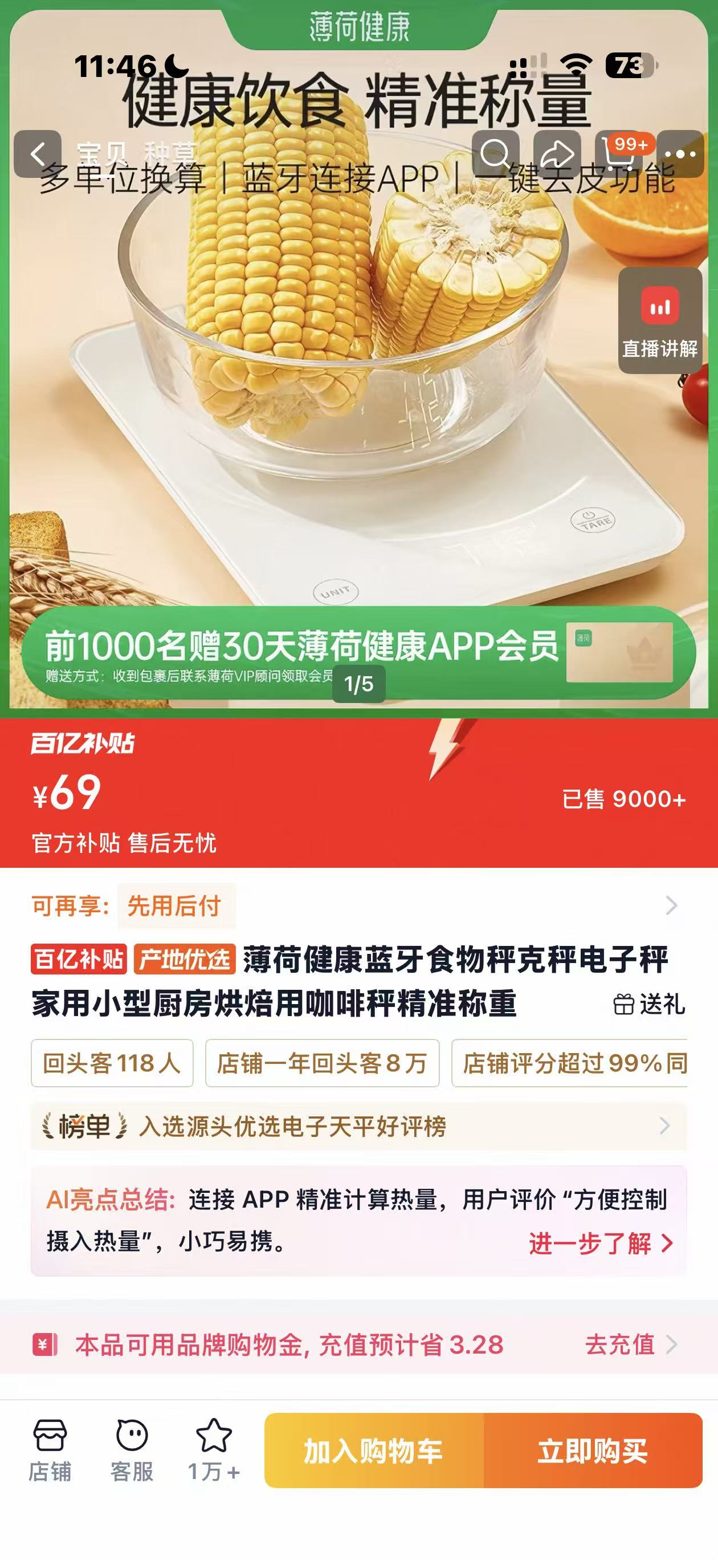
The one product image that matters. ¥69 Bluetooth food scale, 9,000+ sold — real volume, so its review thread is where the market's actual users live.
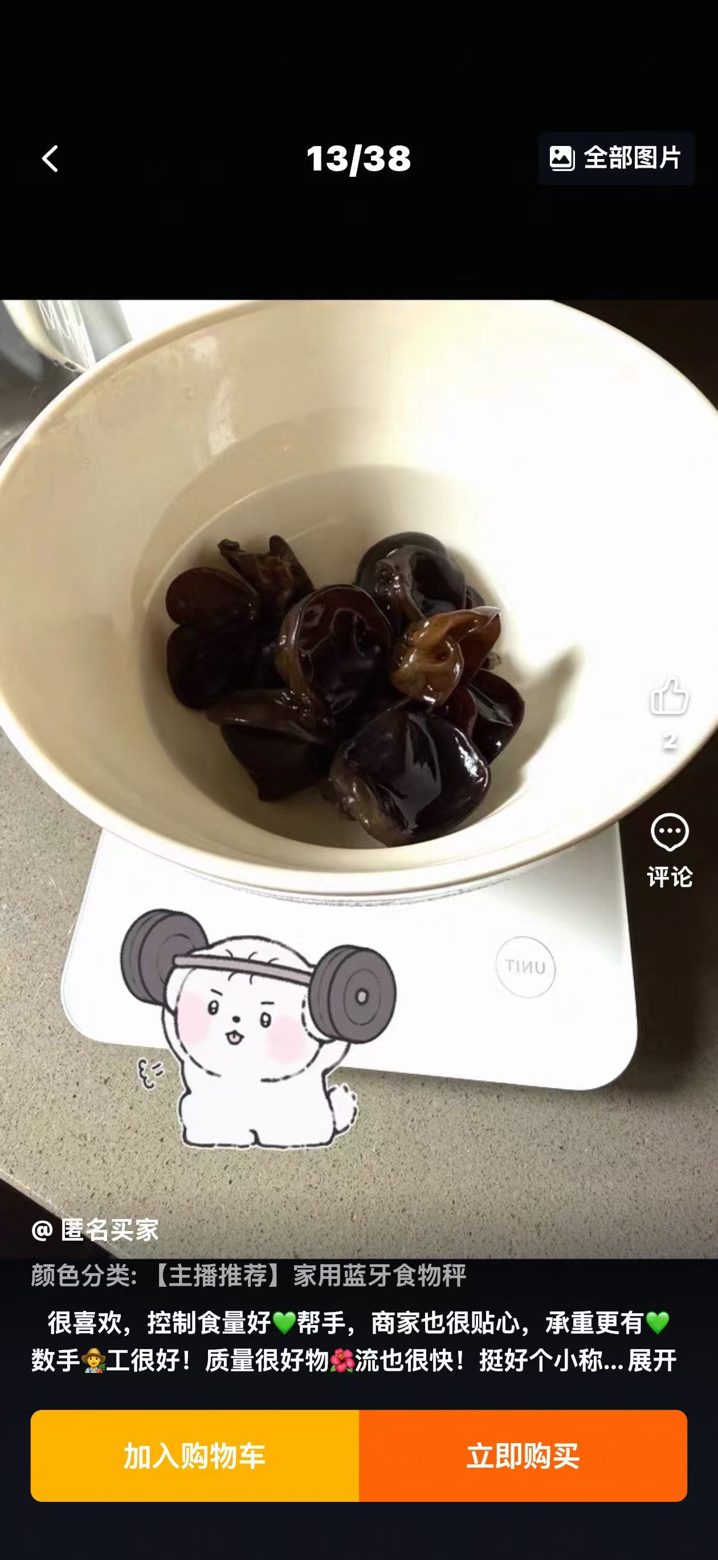
Real use, photographed by a buyer. One ingredient in one bowl — all this hardware can do.
The buyer reviews — my quantitative personas
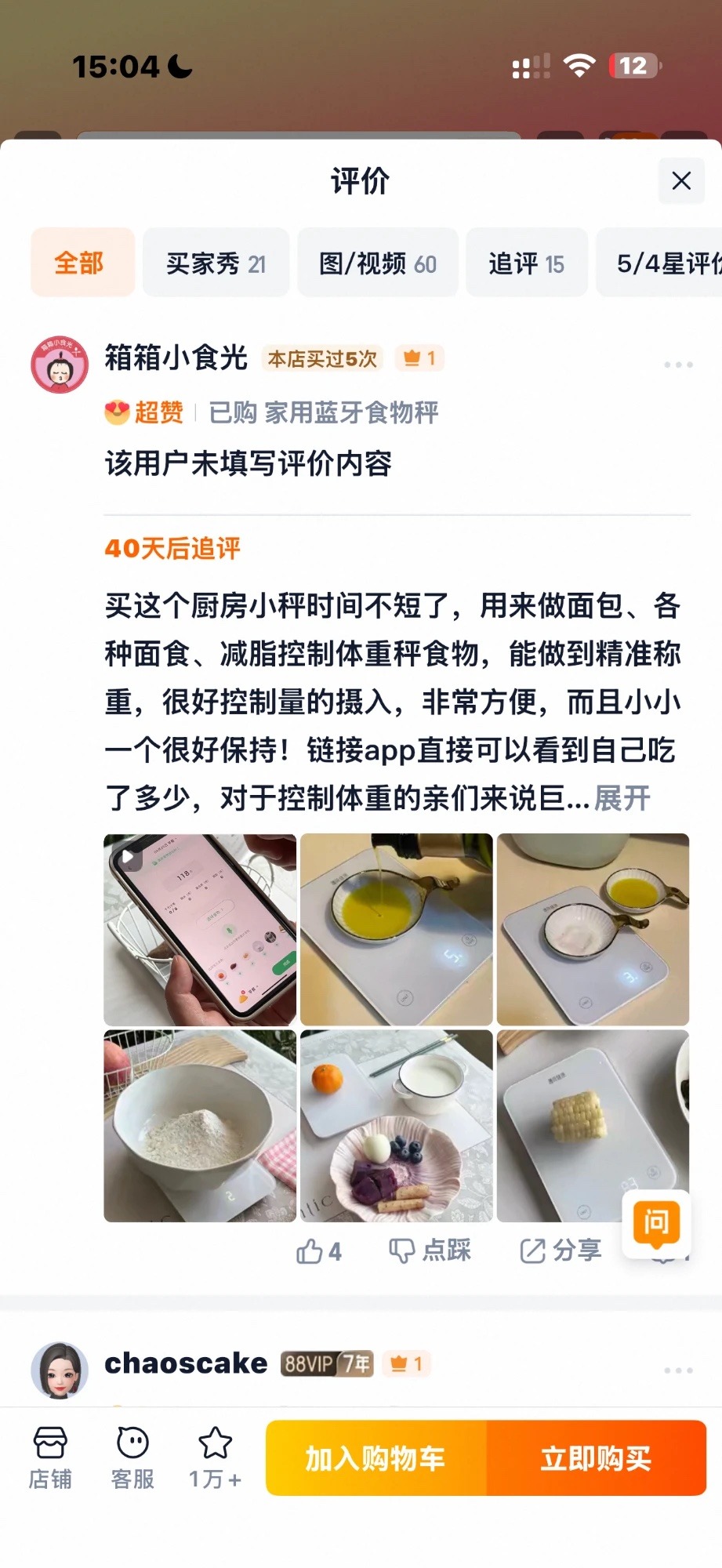
"用来做面包、各种面食、减脂控制体重秤食物……链接app直接可以看到自己吃了多少,对于控制体重的亲们来说巨方便"
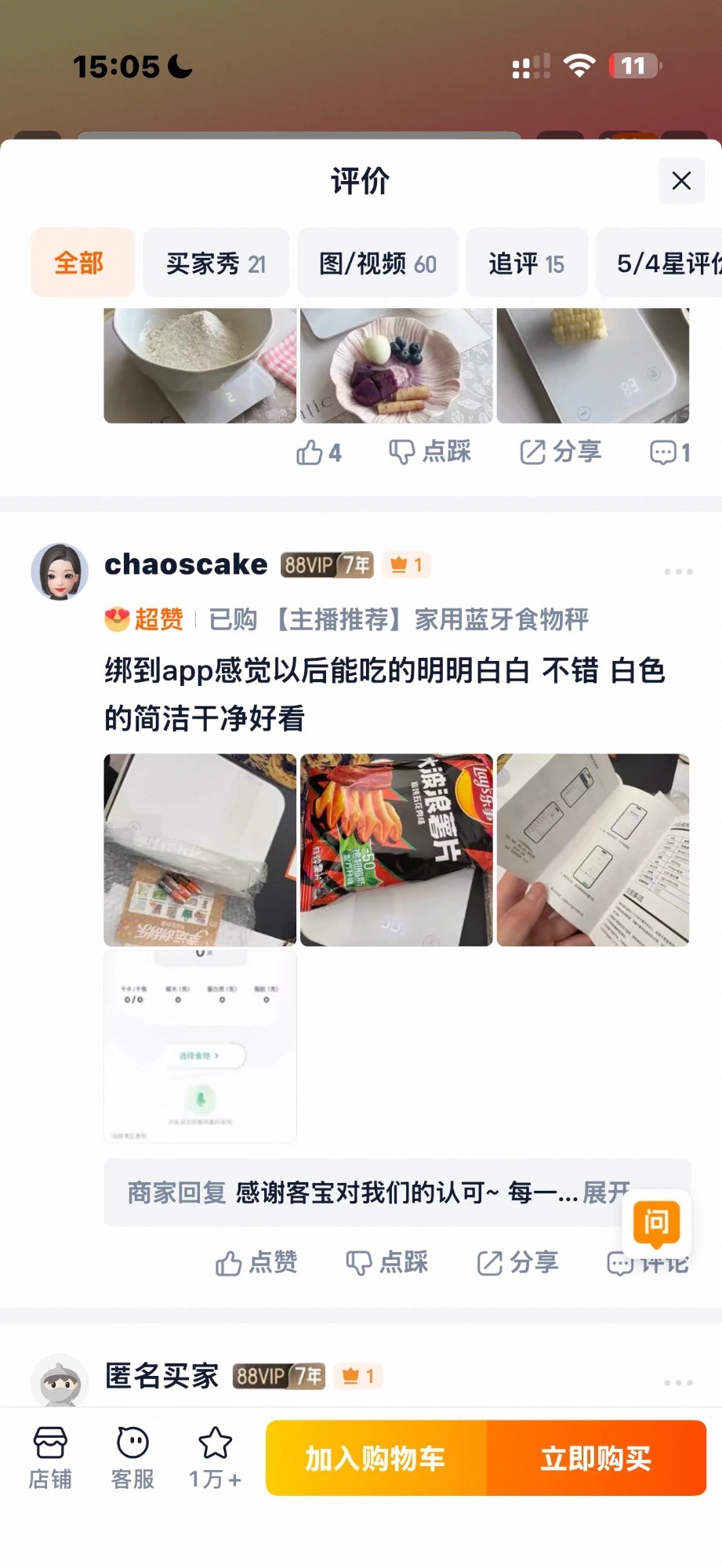
"绑到app感觉以后能吃的明明白白 不错 白色的简洁干净好看"
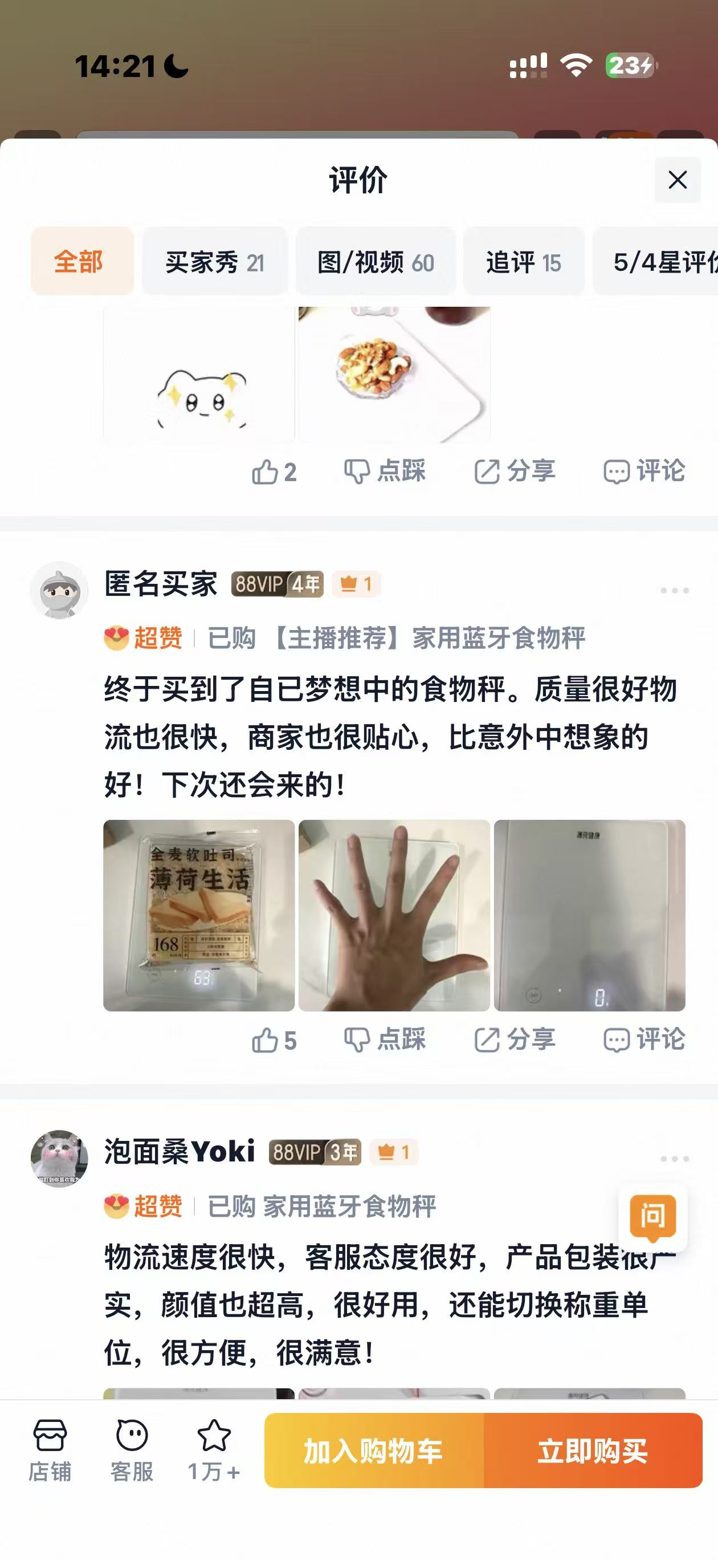
"终于买到了自己梦想中的食物秤。质量很好物流也很快,商家也很贴心,比意外中想象的好!下次还会来的!"
The quantitative persona
- Who: everyday people starting fat-loss or home baking — not athletes, no nutrition training.
- Their gear: a ¥69-class app-linked scale — a load cell and nothing else. No camera, no sensing, no visual check of what's on it.
- Their behaviour: they already weigh many kinds of food — one bowl at a time, then type each item into the app.
- Their words: "控制量的摄入" · "看到自己吃了多少" · "吃的明明白白" — the need, stated by the buyers themselves.
- What they never write: that the workflow is a burden. Reviews are five-star; the pain only surfaced when I interviewed the same crowd.
- What I built on: keep the scale they already trust — remove the per-ingredient workflow their hardware forces on them.